
The Tip Screen Turned a Thank-You Into a Toll
The sandwich cost eleven dollars. Then the screen turned around, three percentages lit up like a quiz show, and the person who made the sandwich watched me decide what their work was worth.
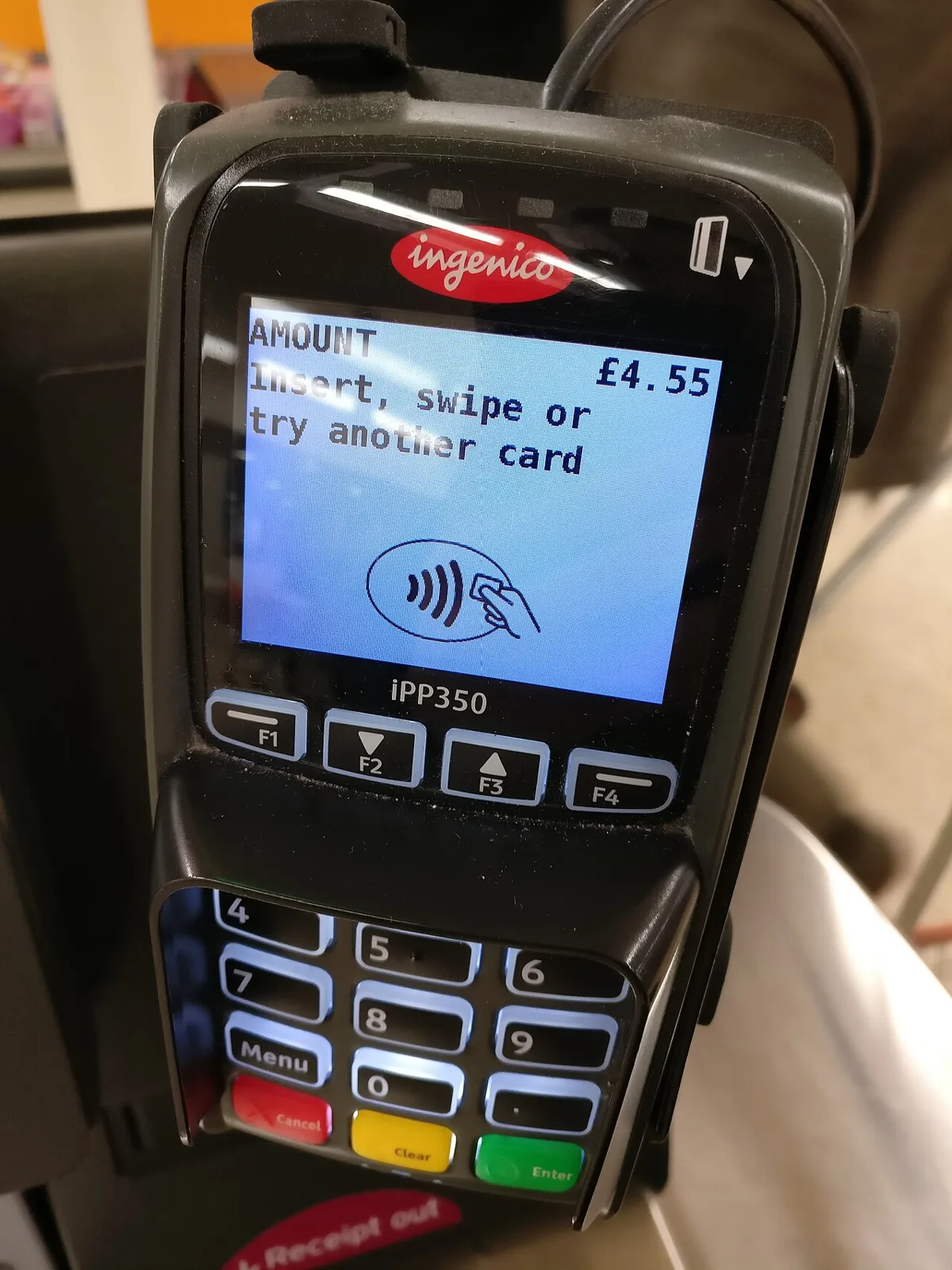
The café two blocks from my apartment makes a sandwich worth crossing a street for, and the sandwich isn't the problem. The problem arrives after the sandwich, when the person who made it turns the payment screen around and the transaction I've done a thousand times changes character. Eleven dollars, the screen says. And underneath: three buttons. Eighteen percent. Twenty percent. Twenty-five percent. A fourth option, smaller, for people willing to hunt for it, and a fifth — no tip — rendered in the visual equivalent of a whisper. The person who built my lunch is standing right there, close enough to watch the screen's reflection change as I choose. We both understand the arrangement. Neither of us designed it.
A tip used to be a private act. Cash moved from a wallet to a counter or a table, folded into the end of a meal, deniable and quiet. The screen version is a public exam administered at the exact moment of maximum social pressure, graded in percentages somebody else picked, with the examinee's answer visible to the one person it most affects. I pay it. Almost everyone pays it. That's not gratitude, though — gratitude doesn't need an audience and a default setting.
The country's numbers read like a shrug that learned arithmetic. In Pew Research Center's survey of 11,945 U.S. adults, conducted in August 2023, 72 percent said tipping is expected in more places today than it was five years ago. Only 34 percent said it's extremely or very easy to know whether to tip or how much in the situations where tipping is expected. Forty percent of Americans oppose businesses suggesting tip amounts at all — the big lit buttons are the single most disliked feature of the modern transaction, and they're also the feature that's spreading fastest. A custom nearly everybody finds confusing, in more places than ever, administered by a prompt a huge share of the country wishes didn't exist. That's the water we're all swimming in now, eleven dollars at a time.
Now the strongest case for the screen, because it deserves to be met standing up. The federal tipped cash wage is $2.13 an hour, and it has been $2.13 an hour since 1991 — a number so old it predates the column you're reading's author. In states that still ride that floor, the person behind the counter isn't topping up a wage with your tip; your tip is a structural part of the paycheck, and the business model was built assuming you'd pay it. The screen also does honest work the cash tip never could: it kills the mental arithmetic at the register, it routes card money to workers who used to watch cash customers tip and card customers walk, and it shows up in the paycheck rather than evaporating into a tip jar's weekly mystery split. A worker who'd rather have the screen than the jar isn't being fooled. Neither is a customer who tips gladly and generously at a full-service table, where the whole ritual still makes sense. The case for the screen is a case about real money reaching real people, and it lands.
What the case can't answer is the design. Who chose the percentages — the person who made my sandwich, or a software default set by a company that takes its own cut of the transaction? What's the service being graded, exactly, in a purchase where I ordered at a counter, carried my own tray and bused it after? And the question that changes the room: if the business can set the prompt, the percentages and the order of the buttons, why can't the business set a wage that doesn't need a prompt at all? None of those questions blame the worker. Every one of them blames the moment — a moment engineered so that saying no feels like an accusation and saying yes costs 25 percent for the privilege of not feeling like a cheapskate in front of a stranger.
What I owe the worker comes before any of that, and it isn't small. The person behind the counter didn't build the screen, didn't pick the percentages and can't turn the prompt off. Stiffing that person to protest the software punishes the one party with no say in either the wage or the interface — the protest lands on exactly the wrong paycheck. So I tip at the counter, and I'll keep tipping at the counter, and my quarrel isn't with the money leaving my pocket. The quarrel is with a system that routes a wage dispute through a customer's conscience at the register, with an audience, because routing it through the payroll department would cost the business more.
A country gets the rituals it designs. A country where every small purchase opens with a public moral exam, priced at a quarter of the bill and graded by a stranger's watching face, is a country that has decided some wages are the customer's problem to feel rather than the employer's problem to pay. A country that wanted gratitude would pay wages that don't need it, and let a tip go back to being what it was for a hundred years — a quiet thank-you, offered freely, worth something precisely because nobody was watching. The sandwich is still worth crossing the street for. The toll at the end of it remains the bill for a choice the rest of us didn't make. If this argument sounds familiar, the companion columns on this desk run the same test on the ringing phone and on a generation renting its whole life — both linked below, both ending where this one ends: with the country the small moment is quietly building.
Sources
- Pew Research Center, "Public Has Mixed Views on the Shift to 'Tip Creep'" (published November 9, 2023; survey of 11,945 U.S. adults conducted August 7–27, 2023) — 72% say tipping is expected in more places than five years ago; 34% say it's extremely or very easy to know whether to tip or how much; 40% oppose suggested tip amounts; the report frames the spread of suggested-amount screens as the central public irritant.
- U.S. Department of Labor, Wage and Hour Division — the federal tipped cash wage stands at $2.13 per hour, the rate set in 1991 and unchanged since.

 Next in this issue · Hollywood"Sesame Street" Premiered 57 Years Ago Today, Built to Prove Television Could Teach →
Get the alert when it breaks.
When a story breaks on a beat you pick, we email or text you. When there's an emergency in your ZIP, we text you. Nothing else, and no ads in any of it.
Check your inbox — and your phone.
THE MOTHER LODE — Edition Nº 006 · Evening. Photos are real, licensed and credited on the page; designed cards carry figures from the article itself.