
"Sesame Street" Premiered 57 Years Ago Today, Built to Prove Television Could Teach
"Sesame Street" proved television could teach: a preschool program built like an advertising campaign, funded with $8 million in grant money, and aimed squarely at the kids commercial television had been ignoring.
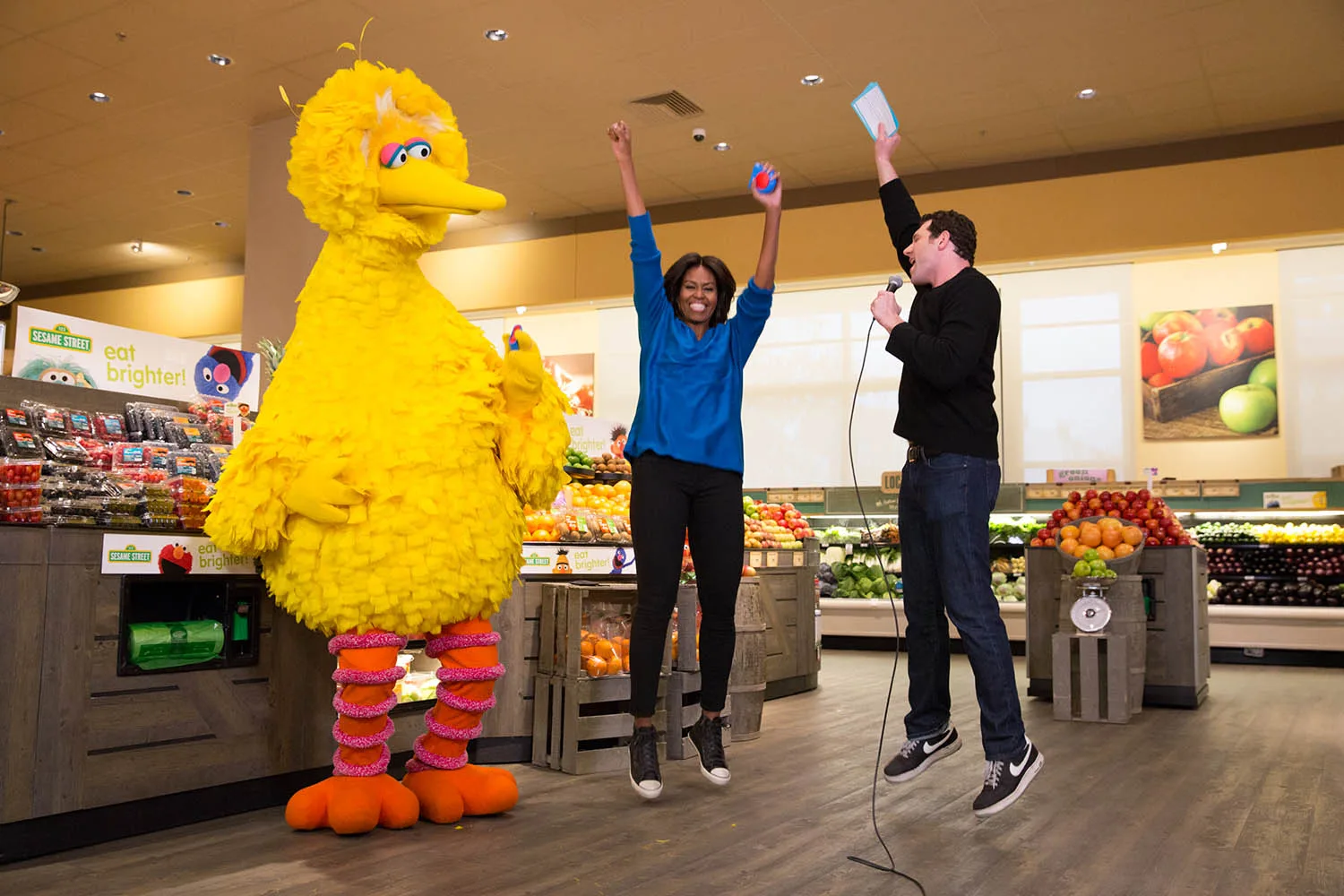
Start with the room. A television set in 1969 sat low and heavy in the living room, and a four-year-old sat lower, on the carpet, at the exact height of the commercials. The people who sold soap and cereal understood that child completely. The people who made children's programs mostly talked over the child's head or around the child entirely, in a sing-song register the commercials never used. On November 10, 1969, a new program premiered on National Educational Television that had been built, deliberately and from the first grant dollar, to close that gap.
The Show Grew Out of a Dinner-Table Question Asked in 1966
The idea formed in 1966, in discussions between television producer Joan Ganz Cooney and Lloyd Morrisett, a vice president of the Carnegie Corporation. Cooney's question ran against the grain of her industry: television plainly held young children's attention for hours a day, so why couldn't the holding be aimed at teaching them something? Morrisett brought the foundation world and the research discipline. The two spent roughly two years researching, developing and raising money before a frame of the program existed.
The money arrived at a scale children's television had never seen. The newly formed Children's Television Workshop received a combined grant of $8 million from the Carnegie Corporation, the Ford Foundation and the U.S. federal government to create and produce the show. Read that figure the way a 1969 television executive would have read it. Eight million dollars, in that era's money, bought a serious prime-time operation. The Workshop spent it on a preschool program, and the spending itself announced the thesis: this audience deserved the industry's best machinery, not its leftovers.
The Program Borrowed the Commercial Break's Grammar on Purpose
Cooney said the quiet part out loud before the premiere. At a press conference on May 6, 1969, she told reporters "Sesame Street" would use the techniques of commercial television programs to teach young children. The techniques had names everyone in the business knew: the jingle that survives a single hearing, the fast cut, the celebrity cameo, the short segment built around one idea repeated until the idea sticks. Commercials used that grammar to sell. The Workshop hired the grammar and pointed it at letters and numbers.
The research ran underneath the showmanship, and the research broke the industry's habits too. "Sesame Street" stands as the first preschool educational television program to base its contents and production values on laboratory and formative research — children watched test material while researchers measured what held their attention, and segments that lost the room got rebuilt or cut. A letter that couldn't survive a four-year-old's wandering eye didn't air in its weak form. The show's famous street, its Muppets from Jim Henson's workshop and its cast of adults all worked inside that discipline: entertain first, at commercial speed, and let the teaching ride inside the entertainment rather than lecture from above it.
The Premiere Landed on November 10, 1969, and the Argument Started Immediately
The program premiered on public television stations on November 10, 1969, to positive reviews, high viewership and an argument that hasn't fully ended since. Educators praised the ambition. Some critics worried that teaching at commercial speed would train children to expect school to entertain them. In 1970, Mississippi's state commission for educational television voted 3 to 2 to keep the program off the state's educational station; a member who lost the vote leaked the reason to The New York Times — the show "uses a highly integrated cast of children," and Mississippi, in the member's words, wasn't ready. The commission reversed itself 22 days later, and that fall the cast performed live in Jackson at an event the same commission helped sponsor. The Workshop's bet survived every round of the fight, because the bet had data under it: the research kept showing children learning the letters and numbers the segments taught.
The institution outlasted the network that carried it. NET gave way to PBS in late 1970, and the program moved with the succession. The Children's Television Workshop renamed itself Sesame Workshop in June 2000. The show is in its 56th season as of 2026, a run that started before the moon landing's first anniversary and has now outlived most of the television industry that doubted it.
The Kid on the Carpet Turned Out to Be the Whole Point
Strip the anniversary down to the wager underneath it. In 1966, American television treated the preschool audience as a market for toys and a dead zone for everything else. Cooney and Morrisett treated that same audience as the most reachable students in the country, sitting at a teacher that never slept, and they raised $8 million to prove the reach could teach. Fifty-seven years after the premiere, the proof sits in plain sight: generations of adults can still sing the alphabet the way the show taught it, in the order the show taught it, at the speed of a jingle. The commercials got the child's attention first. "Sesame Street" showed up on November 10, 1969, and took the attention seriously. Readers following this desk's anniversary calendar can stay with the week's other premiere story — "Fantasia" opened 86 years ago this Friday with a theater full of loudspeakers, and this paper's account of that night runs with the date.
Sources
- "Sesame Street," Wikipedia (record opened in full) — created by Joan Ganz Cooney and Lloyd Morrisett; produced by Sesame Workshop, known as the Children's Television Workshop until June 2000; premiered November 10, 1969 on NET; conceived in 1966 during discussions between Cooney and Carnegie Foundation vice president Lloyd Morrisett; the newly formed CTW received a combined grant of US$8 million; Cooney's May 6, 1969 press-conference statement that the show would use the techniques of commercial television programs to teach young children; the first preschool educational television program to base its contents and production values on laboratory and formative research.
- "History of Sesame Street," Wikipedia (record opened in full) — the first season premiered November 10, 1969; the show is in its 56th season as of 2026; Cooney and Morrisett spent two years, 1966 to 1968, researching, developing and raising money; the $8 million combined grant from the Carnegie Corporation, the Ford Foundation and the U.S. federal government.
- "Sesame Workshop," Wikipedia (record opened in full) — founded May 20, 1968; formerly the Children's Television Workshop (1968–2000); "Sesame Street" premiered on NET on November 10, 1969 and moved to NET's successor, PBS, in late 1970.
- "When Mississippi Once Banned Sesame Street," Mental Floss (January 16, 2020), with the CBR "TV Legends Revealed" account concurring (opened in full this run) — the Mississippi Authority for Educational Television's five-member panel polled 3 to 2 in spring 1970 to prohibit the state ETV station from airing the program; an outvoted member leaked the decision and the "highly integrated cast of children" objection to The New York Times; the board reversed the following month, 22 days after the original decision, and helped sponsor the cast's Jackson appearance that fall.

 Next in this issue · Lists & QuizzesThe 10 Directors Who Have Won the Most Best Director Oscars →
Get the alert when it breaks.
When a story breaks on a beat you pick, we email or text you. When there's an emergency in your ZIP, we text you. Nothing else, and no ads in any of it.
Check your inbox — and your phone.
THE MOTHER LODE — Edition Nº 006 · Evening. Photos are real, licensed and credited on the page; designed cards carry figures from the article itself.