
A Broadway Tour Is Booked City by City by Presenters Who Buy the Show Like a Season. Here Is How the Road Is Routed.
Presenters buy the road city by city — a local presenter commits to a guarantee before a ticket sells, builds a subscription season around the shows it buys, and takes the local risk if the seats stay empty.
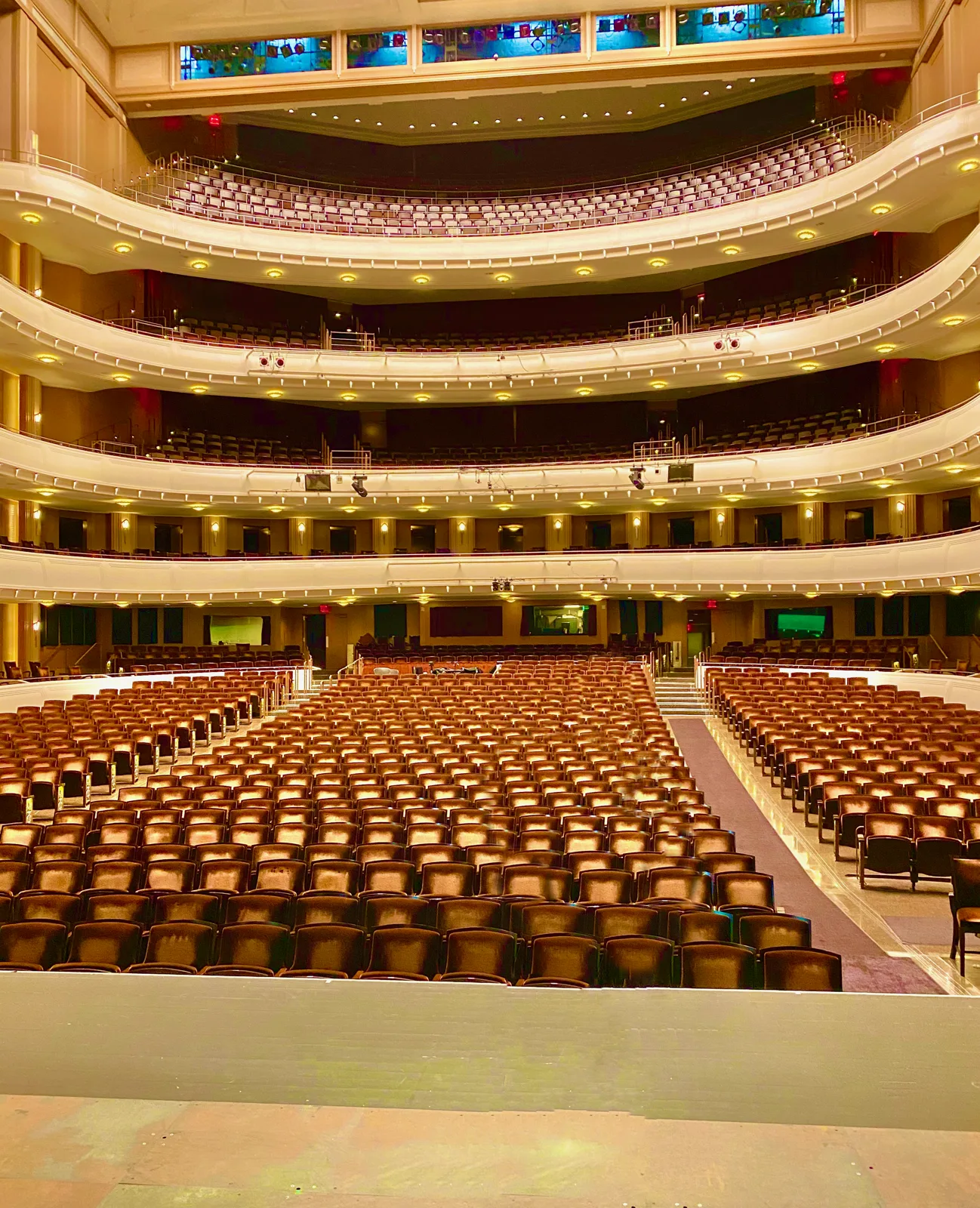
A Broadway tour reaches your city because a local presenter bought it: the presenter commits to pay the production a set sum before a ticket sells, sells the engagement inside a subscription season, and takes the local loss if the house doesn't fill — while a booking agent strings your city into a route with the cities around it, in geographic order, so the company isn't spending its weeks on the highway.
The League Counted 38 Tours in 145 Cities in One Season
The Broadway League's "Economic Impact of Touring Broadway" report, released March 26, 2026, is the fullest recent count of the road. It covers the 2023-24 season and counts only tours under Actors' Equity contracts in the United States.
The count: 38 tours played 145 cities. Producers spent $1.3 billion putting those tours on, and $1.06 billion of that spending landed in the host communities, against $215 million that returned to the New York economy. Average weekly spending per tour, counting production and venue expenses, ran to $1,089,646. With audience spending added — more than $1.34 billion of it on dining, transport, shopping and lodging, per the League's release — the League put touring Broadway's total economic impact at $5.7 billion for the season.
The Presenter Is the Buyer, and the Risk Is Local
The presenter runs the theatre in your city — a performing arts center, a civic hall, a restored movie palace with a stage house — and decides which tours play it. Al Nocciolino, a presenter in upstate New York and Pennsylvania markets for more than 35 years, a past president of the Independent Presenters Network and a founding member of the National Touring Theatre Council, defines the job without decoration: presenters buy the show from an agent who's representing a producer, bring it to their community, and do everything the engagement needs — renting and staffing the theatre, marketing the run, meeting the production's requirements — hoping enough bodies are in the seats when the curtain goes up to cover the cost.
His comparison is the honest one. A presenter holds a perishable asset: a seat unsold tonight can't be added to tomorrow's house, and the engagement lasts a week, or three nights, and then it's gone. The New York producer keeps a piece of the property after closing. The presenter keeps the memory and the subscription list.
The Guarantee Pays the Production Before the Box Office Opens
The deal that built the modern road dates to the mid-1980s. Booking agent Steve Schnepp, president of Broadway Booking Office, who's booked tours since 1989, describes the change plainly: before the guarantee, producers secured venues market by market and carried the risk themselves, and a tour that lost money in two cities could simply close before it reached the third. The guarantee moved the risk. The local presenter promises the producer a fixed sum for the engagement, and the show comes through the door whether the week sells or not.
BroadwayWorld's March 2026 analysis of national tours put a typical guarantee in the neighborhood of $300,000 per week, plus a royalty up to a set amount. The presenter then sells the tickets and pays the house's own costs out of the gross — front-of-house staff, local marketing, venue operations — and once the engagement passes its recoup point, the remaining profit splits between presenter and production.
The guarantee's own history carries a surprise. Schnepp booked "Les Misérables" when it first toured: the guarantee in 1989 was $275,000 a week. A quarter-century later, the same show's guarantee ran about $315,000 — a rise of not quite $50,000 across 25 years in which road ticket prices moved from the $50s past $100 in some markets.
Three Deal Shapes Divide the Risk
The guarantee isn't the only structure. Trade reporting from the Broadway League's Spring Road Conference — the annual meeting where presenters and producers do this business in person — describes three basic deals:
- Guarantee. The presenter pays the fixed fee, usually with a royalty and a profit split after the presenter recovers expenses. The presenter's risk is highest, and so is the presenter's upside on a hit.
- Four-wall. The production rents the facility and pays all expenses itself — the arrangement Broadway itself runs on, moved to the road.
- Terms. A shared-risk hybrid: an agreed split of the gross, with specified costs such as advertising or stagehands taken off the top first.
Which shape a given week takes depends on the show's drawing power and the market's size. A first-class touring week needs a market of about $1 million, per one producer newsletter's 2026 sizing of the trade; a smaller-market week works from a far lower base, and the deal bends to match.
The Season Is Sold Before the Route Is Final
Presenters don't buy single shows in isolation. They build a season — a package of engagements sold to subscribers as a series, renewed year to year. Nocciolino's account of the balancing act is specific: subscribers want the best of the new shows, they want family titles they can bring children and grandchildren to, and they want the classics brought back — and the presenter who misjudges the mix hears about it at renewal time.
The subscription base is also the financial foundation under the guarantee. A season sold a year ahead is what lets a presenter commit to a fixed fee before single tickets move, and it's why the anchor titles on a presenter's season tend to be the shows with long Broadway records behind them. The Tony electorate makes the same calculation from the other side of the table — the road presenters who vote on Broadway's awards are grading, in part, what they'll later be asked to buy.
Routing Is a Calendar With Trucks
Once the presenters have bought, the booking agent's second job begins: putting the cities in a logical, geographic order so the tour runs as long as possible and earns as much as it can, in Schnepp's own description of the work. The discipline is dark time. A company that's moving is spending on trucking and housing while it grosses nothing, so the route rewards short jumps and punishes empty weeks.
The current season shows the pattern at its tightest. "The Phantom of the Opera" ends a run at The Smith Center in Las Vegas and opens three days later in Oklahoma City — close on a Sunday, load out and travel on the Monday, load in on the Tuesday, open on the Wednesday — then repeats the rhythm through Tulsa, Kansas City and Dallas into the new year. "The Book of Mormon" closes in Chicago, opens in Las Vegas on the same three-day turn, and later makes the itinerary's longest jump, to Honolulu.
The route, in other words, is a calendar with trucks. Everything else in this piece is commentary on that sentence.
The Road House Is Built Bigger Than a Broadway House
The receiving end explains the economics. Touring houses run larger than Broadway houses: the average touring venue holds more than 2,000 seats, against Broadway houses that mostly sit between 1,000 and 1,900. A tour's weekly running costs also run lower than a Broadway company's, because the presenter absorbs the marketing and front-of-house costs a Broadway production carries itself. A large musical costing more than $500,000 a week to run on Broadway might run on tour at close to $300,000 — around the level of the venue guarantee.
The houses have the scars to prove the arrangement. When "The Phantom of the Opera" first toured, most older American theatres couldn't fit the production, and house after house blew out its back wall to take it — Nocciolino calls it the "Phantom" back wall syndrome, and credits the rebuilds with starting the restoration wave that returned many downtown theatres to use. Reynolds Hall at The Smith Center, the Las Vegas house on the current "Phantom" route, seats 2,050 across five levels — a road house built, from the start, to the scale the road requires.
The League doesn't publish the road's grosses weekly, the way it publishes Broadway's. The road's record surfaces in counts like the March report — 38 tours, 145 cities, $5.7 billion in impact for one season — and in the 2024-25 touring attendance the League put at approximately 14.9 million. Read those two numbers together and the routing stops looking like logistics. It's the distribution system for the whole industry: Broadway builds the show, and the presenters' guarantees, seasons and calendars are what carry it to the 145 cities where most of its audience actually lives. If you're planning a first trip to a touring house, our explainer on what happens during previews — and what "frozen" means when a show stops changing — is the companion piece, and our account of how a Broadway show recoups explains where the money a tour earns goes first.
Sources
- The Broadway League, "The Economic Impact of Touring Broadway" (2023-24 season), released March 26, 2026 — 38 Equity tours, 145 cities, $1.3 billion producer spending, $1.06 billion in host communities, $215 million to New York, $1,089,646 average weekly spending, $5.7 billion total impact including more than $1.34 billion in audience spending — as reported in full: Broadway News, "The Broadway League releases report on the economic effects of Broadway tours," March 27, 2026. https://www.broadwaynews.com/the-broadway-league-releases-report-on-the-economic-effects-of-broadway-tours/ — opened in full. The League's full report itself is sold, not posted; the figures above are the League's released figures, labelled as the League's.
- Aparte Magazine, "The Business of the Road: Guarantees, Splits and a $5.7 Billion Touring Economy," October 29, 2026 — the guarantee model, house costs and recoup split, touring-house size comparison, Broadway-versus-tour running costs, the "Phantom" and "Book of Mormon" current itineraries, the subscription-season passage. https://www.apartemagazine.com/stories/the-business-of-the-road-touring-economics/ — opened in full.
- Ken Davenport, Producer's Perspective Podcast Episode 23 transcript — booking agent Steve Schnepp (Broadway Booking Office): the booking agent's job in his own words (introduce the tour to presenters, put the cities in logical geographic order to maximize the run), the mid-1980s creation of the guarantee, the "Les Misérables" guarantees of $275,000 (1989) and about $315,000 (a quarter-century later). https://kendavenport.com/podcast-episode-23-transcript-steve-schnepp/ — opened in full.
- Ken Davenport, Producer's Perspective Podcast Episode 31 transcript — presenter Al Nocciolino (past president, Independent Presenters Network; founding member, National Touring Theatre Council): the presenter's job defined, the perishable-seat risk, the subscription model, season-building for subscribers, the "Phantom" back wall syndrome. https://kendavenport.com/podcast-episode-31-transcript-al-nocciolino/ — opened in full.
- Ken Davenport, "At the Broadway League Conference: Day 2 / What's the 'deal' with the road?" — the Spring Road Conference panel's three deal structures (guarantee, four-wall, terms) with their splits. https://kendavenport.com/at-the-broadway-league-conference-day-2whats-the-deal-with-the-road/ — opened in full via search return.
- Broadway.com, "John Gore Organization's Bob Bucci, Jeff Chelesvig and More Receive League Awards," May 14, 2025 — the League Awards at the 2025 Spring Road Conference; 2024-25 Touring Broadway attendance of approximately 14.9 million, as stated by the League. http://www.broadway.com/buzz/205684/john-gore-organizations-bob-bucci-jeff-chelesvig-and-more-receive-league-awards/ — opened via search return in full.

 Next in this issue · The ExplainersIMAX 70mm Film Runs Sideways Through the Projector at 15 Perforations a Frame. Here's Why That Makes the Picture Taller. →
Get the alert when it breaks.
When a story breaks on a beat you pick, we email or text you. When there's an emergency in your ZIP, we text you. Nothing else, and no ads in any of it.
Check your inbox — and your phone.
THE MOTHER LODE — Edition Nº 006 · Evening. Photos are real, licensed and credited on the page; designed cards carry figures from the article itself.