
An Esports Champion Usually Survives Two Tournaments: the Qualifier Anyone Can Enter, and the Bracket That Follows It.
Most champions win the qualifier first — an open bracket your team could enter this winter, then a closed bracket against invited teams, then the main event itself. Here's the machine, end to end.
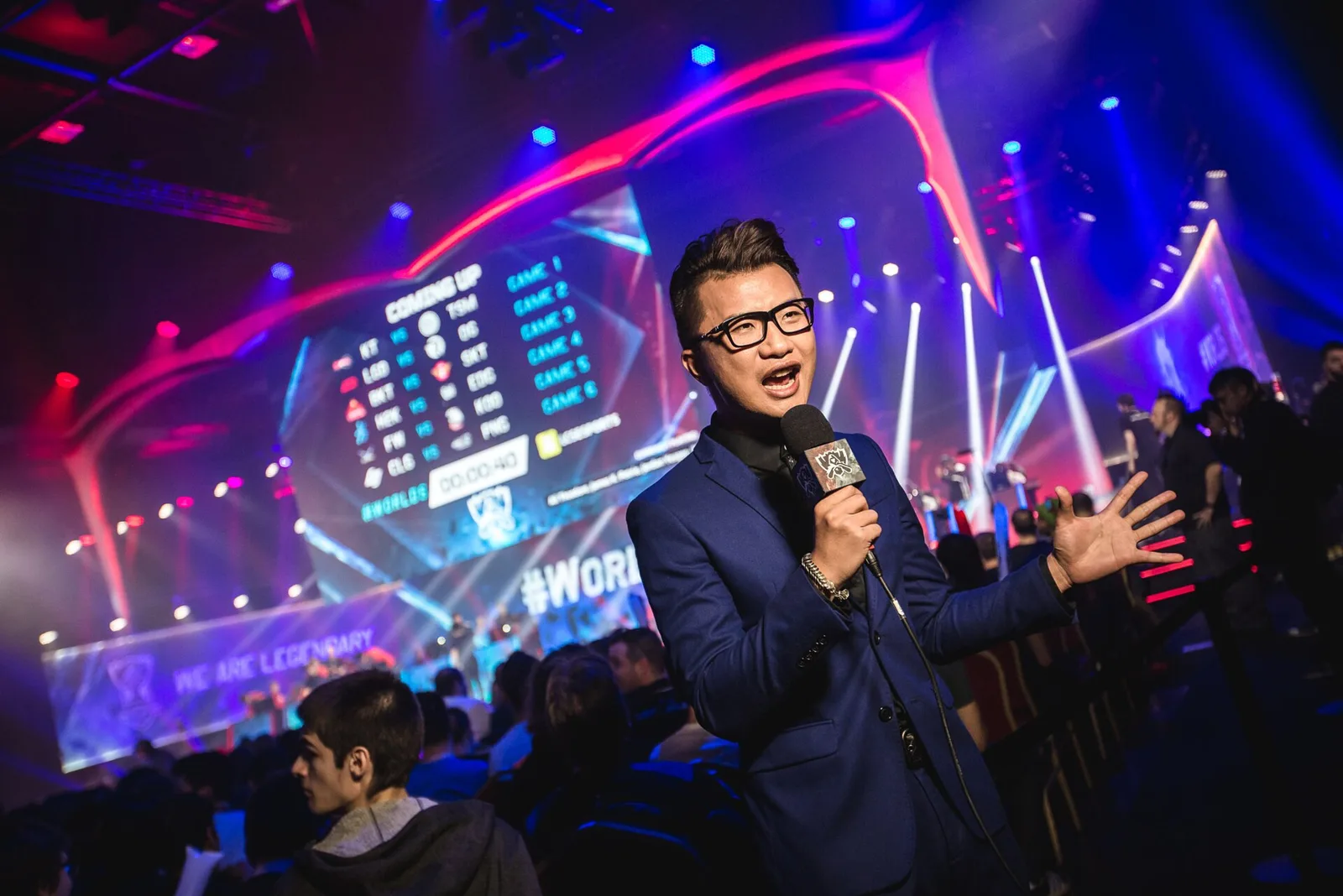
Watch what happens when you follow a champion backwards. The arena win is the last thing they survive. Before it there's a main-event bracket, before that a closed qualifier full of invited teams, and before that an open qualifier that — and this is the part the broadcast never shows you — your five-stack could've entered. A big open-circuit tournament isn't one competition. It's a staircase of them, and most of the field falls off the first step. Here's each step, with one real staircase doing the demonstrating: ESL's road to IEM Brazil 2026, from the organiser's own published qualifier documents (official organiser documents, opened in full).
So how many tournaments does a champion actually win?
Usually two, sometimes three — the qualifier and the bracket that follows it, and on the ESL road, there's a closed qualifier wedged between the open one and the event itself. Hold that shape in your head and every esports headline gets easier to read: when a team "qualifies for" an event, they've won a tournament whose prize is a seat in a harder tournament. The trophy ceremony you're picturing is just the top step. The champion's real achievement is the staircase — and the staircase is where the format words you keep hearing (seeding, double elimination, invites) all live.
Who gets in without qualifying — and who decides?
Start at the top step and work down, because that's how the seats are dealt. IEM Brazil 2026 has 16 seats (organiser's published slot table). Eleven go straight to teams invited off the Global VRS list, ranked 1st through 11th; one each goes to the top North America and South America VRS teams; and three are left for qualifiers — two through a Global Closed Qualifier, one through an Americas Closed Qualifier.
Unpack the letters once and you're fluent: VRS is the Valve Regional Standings — Valve's own ranking of Counter-Strike teams. Valve publishes the game, and its ranking is the guest list. ESL's IEM Beijing 2026 page states the mechanics in two plain lines: invites follow the first monthly VRS publication of August 2026, and seeding follows the October 2026 publication (official event page). Seeding, translated: your rank decides who you play first, with the strongest teams placed apart so they can't knock each other out in round one. If it helps, picture a tennis draw — the top seeds are the names the bracket is built around, and everyone else is slotted in underneath them.
So an invite isn't a favour and it isn't bought. It's a ranking, issued by the game's owner, refreshed monthly, and the organiser deals the top seats from it in order.
How does the qualifier anyone can enter actually work?
Now the bottom step — yours. ESL's Global Open Qualifier for IEM Brazil runs January 16–17, 2026 (official qualifier document, opened in full). The format is as welcoming and as cruel as a format gets:
- Single elimination. Lose once and you're done. Most matches are best-of-one — one map decides it — with the decider matches played best-of-three.
- Four teams advance. Out of the whole open field, four come out the other side into the Closed Qualifier.
That's it. There's no league, no season, no second chance waiting next week. You win every match for two days or you go home, and the prize for surviving isn't money — it's a harder room.
What's waiting in the closed qualifier?
Sixteen teams, and only four of them are yours. The Global Closed Qualifier (January 21–23, 2026) takes the four open-qualifier survivors and adds twelve invited teams from the Global VRS list, ranked 12th through 23rd — the teams just below the ones who got main-event invites (official qualifier document). The format flips from the open's cruelty to something fairer and longer: a double-elimination bracket, all matches best-of-three, with seeding set on January 19.
Double elimination, translated by watching it: you carry two lives. Lose a match and you drop into the lower bracket; lose a second one and you're out. The schedule ESL publishes shows the machinery working — upper-bracket rounds and lower-bracket rounds running side by side across three days — and at the end, two of the sixteen take main-event seats. The Americas route runs smaller and tighter in the same shape: four invited teams plus four open survivors, eight teams, double elimination, and exactly one seat at the end.
Notice what the staircase just did to your open-qualifier fairy tale: you didn't beat the field, you beat a filter. The invited teams in the closed bracket are there precisely so the main event's last seats get contested by teams the ranking already rates. The door's genuinely open. The hallway behind it's guarded.
Who's actually in charge — the organiser or the game's owner?
Both, at different heights, and Counter-Strike shows you the split cleanly. Valve owns the game and owns the ranking that decides invites and seeding. ESL and BLAST own the events — the brackets, the broadcasts, the venues. An organiser runs the tournament; the publisher's ranking decides who the tournament is allowed to invite. In Counter-Strike's open circuit, that arrangement keeps the door open by design: because invites come from a public ranking or from qualifiers, no organiser can simply stock an event with friendly teams.
Now watch the opposite design, because you've seen it if you've watched League of Legends. There, Riot Games — the publisher — doesn't just rank the field; it established the league itself, and its own rulebook background states that teams compete after they've entered into Team Participation Agreements and been "admitted by contract" to the league (publisher's rulebook background). That's a franchised league: the seats belong to contracted teams, season after season, and there's no open qualifier your five-stack can enter, because entry isn't a bracket — it's a contract. Open circuit versus franchise isn't a quality argument. It's a door argument: one model lets anyone climb the staircase, the other hands out keys.
Where does the money actually go?
Follow it in the same order the teams see it, and keep every figure labelled — these are each event's published terms, not industry law.
At ESL's 2026 Masters events, the published table totals $1,000,000 per event, and it isn't all "prize money" (organiser's published prize table). The winner's line reads $125,000 in prize money plus a $170,000 Club Reward — two different pots in the same row. The prize column runs down to $4,000 for 13th–16th, while the Club Reward column stops paying below 12th. The organiser is telling you, in print, that a finish pays the competing side and the club behind it as separate lines — though how a team then splits its side with its players isn't stated in these documents, and this piece won't guess at it.
BLAST's published 2025 explainer spreads the money even wider (organiser's published figures): $8.5 million across the year, split three ways — $4 million in participation fees, $2.5 million in prize money, and a $2 million Frequent Flyer pool divided at year's end by tokens teams earn for showing up and placing. Participation fees are the telling one: they're guaranteed income tied to your ranking at invite, not your finish — $81,250 per team at BLAST Rivals for all eight teams, win or lose the bracket. So at the top of the sport, a big slice of the money never waits for a result at all. It pays for the field being worth watching — and it's paid to teams, on the organiser's terms, before a map is played.
If you're entering, enter with your eyes open: the open qualifier's best-of-one format means one bad map ends your winter, so scrim the maps you'd hate to draw. And if you're watching the next big final, read the Versus piece on Switch 2 against PS5 next — it's the same habit this staircase teaches: before you argue about who's winning, check who's counting, and what the count actually pays for.
Sources
- ESL Pro Tour, "All About ESL Pro Tour Qualifiers in 2026" (opened in full): https://pro.eslgaming.com/tour/2025/11/esl-pro-tour-qualifiers-2026/ — the Global and Americas qualifier structures for IEM Brazil, Atlanta and Beijing 2026: open qualifiers (single elimination, best-of-one, deciders best-of-three, 4 teams advance), closed qualifiers (16 teams Global / 8 Americas; 12 Global VRS invites ranked 12th–23rd / 4 regional VRS invites, plus 4 open survivors; double elimination, all best-of-three; seeding dates; 2 Global seats and 1 regional seat per event). [PRIMARY — official organiser document]
- ESL Pro Tour, "2026 Events in Brazil, USA & China" (opened in full): https://pro.eslgaming.com/tour/pl/2025/06/2026-events-in-brazil-usa-china/ — the 16-slot distribution per event (Global VRS invites 1st–11th, regional VRS invites, closed-qualifier seats) and the published prize table: $125,000 + $170,000 Club Reward for 1st, descending to $4,000 prize money for 13th–16th with no Club Reward below 12th — $1,000,000 total per event across the two columns. [PRIMARY — official organiser document]
- ESL Pro Tour, IEM Beijing 2026 event page (opened in full): https://pro.eslgaming.com/tour/details/iem-beijing-2026/ — "Invites will follow the first available monthly VRS publication of August 2026. Seeding will follow the first available monthly VRS publication of October 2026," and all stages played in person on LAN, November 2–8, 2026. [PRIMARY — official organiser document]
- BLAST.tv, "BLAST Premier 2025: Prize Money, Team Earnings, and the Frequent Flyer Programme Explained" (opened in full): https://blast.tv/article/blast-premier-2025-team-earnings-frequent-flyer-programme — BLAST's own published 2025 figures: $8.5 million total ($4 million participation fees, $2 million Frequent Flyer Programme, $2.5 million prize money); participation fees by ranking band (Bounty $40,000 / $26,250 / $7,500; Open $45,000 for 1st–12th; Rivals $81,250 per team for all eight); token rules and the year-end split; the note that a declined invite moves the fee into the Frequent Flyer pot. [PRIMARY — official organiser document]
- Riot Games, 2026 League Championship Series Rulebook (V2.1) — background section (§1.1–1.2): Riot established the ruleset for competitive League of Legends in the Americas, applying to team entities that have entered into Team Participation Agreements and been admitted by contract to compete. Cited for the franchised-league contrast only, and only for what that background states. [PRIMARY — publisher rulebook; background read via the published document record in this run — full-text open was blocked by a reader rate limit, flagged here and in the self-audit]

 Next in this issue · OpinionThe Tip Screen Turned a Thank-You Into a Toll →
Get the alert when it breaks.
When a story breaks on a beat you pick, we email or text you. When there's an emergency in your ZIP, we text you. Nothing else, and no ads in any of it.
Check your inbox — and your phone.
THE MOTHER LODE — Edition Nº 006 · Evening. Photos are real, licensed and credited on the page; designed cards carry figures from the article itself.