A "4K Restoration" Starts With a Dying Reel of Film. Here Is What Actually Happens to It.
The label on the box names the scan's resolution and nothing else. The work is a hunt for the least-damaged piece of film in the world, a 4K scan of every frame, an automated cleaning pass, and then people repairing the picture by hand, frame by frame.
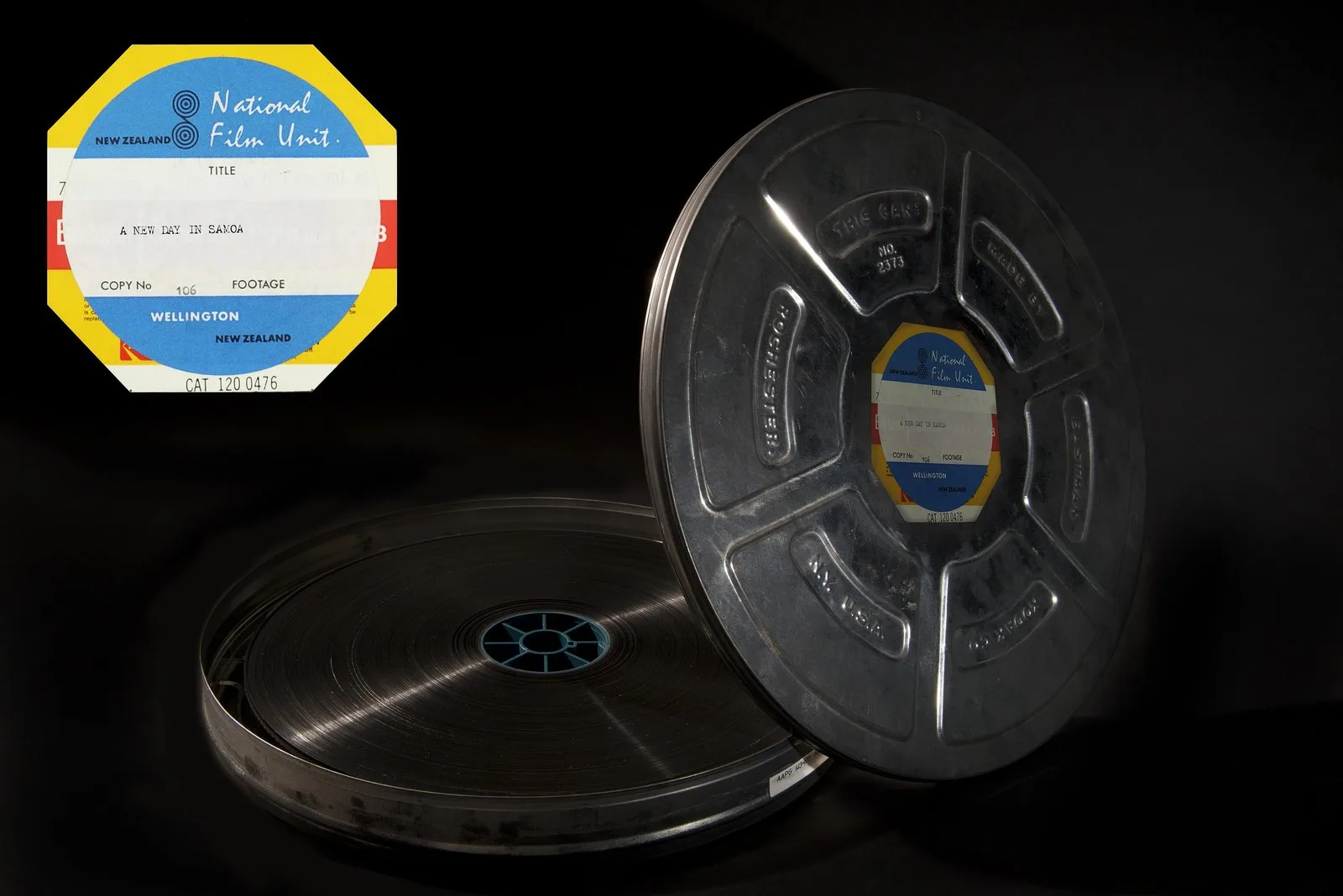
The object at the start of every restoration is a reel of film that's been dying at its own speed for decades — shrunken, warped, torn, sometimes mouldy, always the best copy of the film left on Earth, or it wouldn't be in the room. The "4K restoration" on the box is the end of that reel's journey. Here's the journey.
The First Job Is a Hunt, and the Negative Is the Prize
Restoration begins with finding a film element, and the better its condition, the better the restoration can be. The hierarchy runs by generation. The original camera negative sits at the top — it's the film that ran through the camera, so every later copy is a copy of it. Below it sit duplicate negatives and release prints, each a generation removed, each carrying a little less of the original image.
The negative doesn't always survive inspection. For Criterion's restoration of "Merrily We Go to Hell," Dorothy Arzner's 1932 film, the team tracked down a nitrate print held at the UCLA Film & Television Archive — and found it had succumbed to mold, unusable. The restoration proceeded from Universal Pictures' 35 mm composite duplicate negative, the best element available. Criterion's account is blunt about the cost: the duplicate lacked the image clarity and the dense blacks a nitrate element would have kept. The hunt decides the ceiling before any technology touches the film.
The hunt can also reverse itself mid-job. Restoring "Mildred Pierce," the team first scanned a number of archival elements at 4K at Warner Bros.' Motion Picture Imaging lab in Burbank — and then the original camera negative came to light and became the basis for the majority of the restoration. Its final reel was inferior, so that reel came from another archive altogether. One finished film, three sources, chosen shot by shot on condition.
The Scan Turns Film Into Data at 4K
The chosen element is scanned at 4K resolution — each frame digitized at roughly four thousand pixels across. "Merrily We Go to Hell" was scanned on a Lasergraphics scanner at Roundabout Entertainment in Burbank, and the data went to Criterion's headquarters in New York for the restoration itself.
The scale of the data is the scale of the film. A feature runs 24 frames per second — the restoration artist's own count, in Criterion's account, is twenty-four photographs flashing by every second. Multiply it out: a 90-minute feature is 129,600 individual frames, and every one of them is a separate picture that may need work. That's the unit of labour the label hides. Nobody restores a film. Somebody restores 129,600 photographs in sequence and keeps them consistent.
Machines Take the First Pass, Hands Take the Second
Criterion's process runs in two stages. First, the entire feature goes through automated tools — in the "Merrily" restoration, software called Phoenix, made by Digital Vision. The automated pass runs in a set order. Stabilization fixes the frame's position, removing film jitter. Deflicker evens out brightness that varies from frame to frame, the strobing common in old film. Then the dust and scratch tools repair small dirt and scrapes — sequenced in that order because each step makes the next one's repairs more accurate.
Then the processed scan goes to people. The manual stage works in DRS Nova, made by MTI Film, and its artists do everything from painting out dirt and scratches to repairing entire frames destroyed by tears in the physical film. "Merrily" posed a harder problem: intermittent warping in the film itself. The fix is mechanical in conception and painstaking in practice — set tracking points on stationary objects inside a shot, let the software read the abrupt movements the warp causes, and digitally nudge those areas back into place.
The division of labour is the craft's rule book, and it holds across the published accounts: automation handles the uniform damage, the kind that's true of every frame; hands handle the damage that's true of one frame.
The Label Certifies the Scan, Not the Source
Here's what the "4K" on the box doesn't say. It doesn't say which element was scanned — a camera negative and a battered duplicate both scan at 4K, and the label reads the same either way. It doesn't say how much of the negative survived, or how much of the finished picture came from lesser elements. It doesn't say how long the manual pass took.
The Apu Trilogy makes the omission concrete. The negatives of Satyajit Ray's three films were damaged in a fire in London; Criterion's head restoration artist Phoebe Harmon puts the salvage at 50 to 60 percent of the original camera negative for the first two films. The elements went through physical restoration at the Cineteca di Bologna in Italy, were scanned at 4K, and then spent six months in digital restoration at Criterion's facility in New York, under technical director Lee Kline. All three films carry the same two words on their boxes as a restoration built from a pristine negative. The words are accurate. They just aren't the whole record.
From Raw Prompt to Screening Floor: The Order Never Changes
Reel by reel, the chronology is fixed. Find the best surviving element, and expect the hunt to change its answer mid-job. Repair the physical film enough to run it. Scan every frame at 4K. Run the automated pass — stabilize, deflicker, clear the uniform dirt. Hand the scan to artists for the frame-by-frame work no tool can judge. Grade the result against reference copies and the film's original look. Strike the new master.
What reaches the screen carries all of that invisibly. The label keeps the smallest fact in the chain — the width of the scan — and the restoration's real measure stays where Criterion's accounts put it: in which reels survived, and in the months of hands between the scan and the screening.
Sources
The Criterion Collection, "Restoring Merrily We Go to Hell, One Warp at a Time" (criterion.com/current/posts/7398) — element hunt, mold, duplicate negative, 4K Lasergraphics scan, Phoenix pass order, DRS Nova manual pass, dewarping. https://www.criterion.com/index.php/current/posts/7398-restoring-merrily-we-go-to-hell-one-warp-at-a-time · The Criterion Collection, "Bringing Mildred Pierce Back to Luminous Life" (criterion.com/current/posts/4446) — 4K scans at Warner Bros. MPI, the surfaced camera negative, the borrowed final reel. https://www.criterion.com/current/posts/4446-bringing-mildred-pierce-back-to-luminous-life · SHOOT, "Criterion Collection Employs MTI Film's DRS Nova in 4K Restoration of Satyajit Ray's 'Apu Trilogy'" — fire damage, the 50–60 percent salvage figure, Bologna, the six-month New York restoration, Kline and Harmon named. https://www.shootonline.com/spw/criterion-collection-employs-mti-films-drs-nova-4k-restoration-satyajit-rays-apu-trilogy/

 Next in this issue · TechSwap Netflix's Recommender for a Most-Popular List and Engagement Falls 12 Percent, by Netflix's Own Count →
THE MOTHER LODE — Edition Nº 004 · Late. Photos are real, licensed and credited on the page; designed cards carry figures from the article itself.