I'm Paying Full Price for 81 Percent of a Retirement
Micah Reed is 26, works, and pays into Social Security with every check. The program's own trustees project the money runs short in 2034, when taxes cover 81 percent of promised benefits.
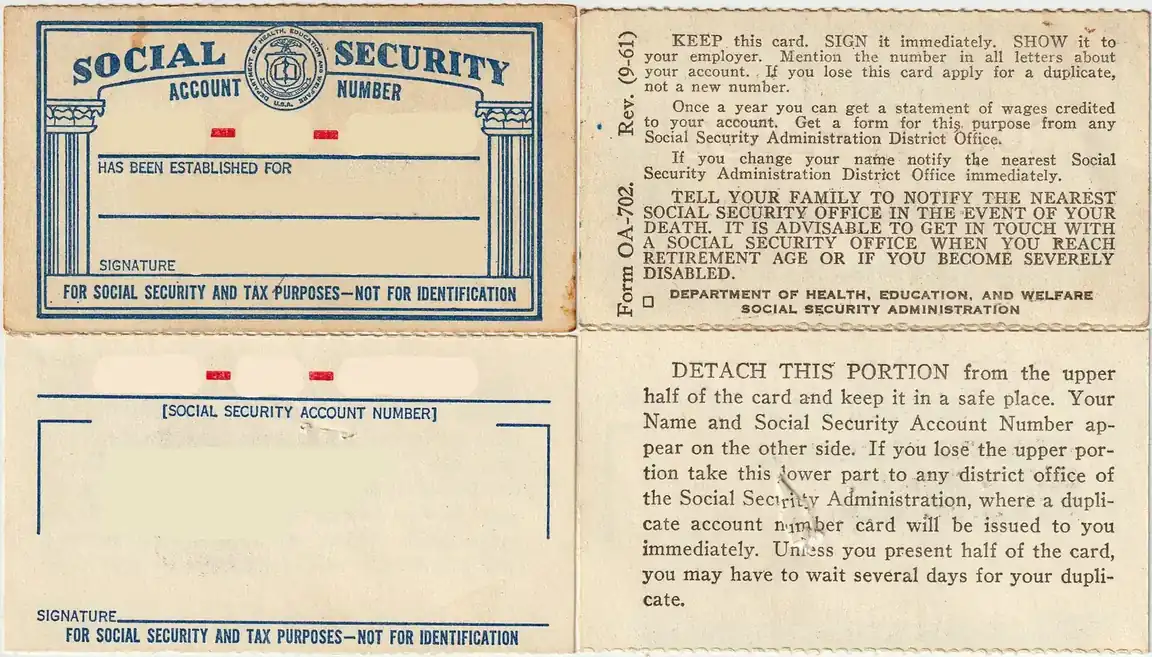
Social Security's own trustees say the money runs short in 2034, and from that year the program pays 81 cents of every promised dollar. That isn't a barstool prediction about my retirement. It's the schedule, printed in the government's own annual report, signed by the people who run the program. I'm 26. I'll be 35 the year the schedule lands. My whole working life happens on the far side of that date, and every check I cash between now and then pays in at the full rate.
I grew up behind the counter of my father's auto-parts store, so I learned to read a pay stub before I learned to drive. The stub takes 6.2 percent for Social Security, and the store matched it with another 6.2 percent nobody ever saw. Twelve point four cents of every dollar, in, from the first job. That's the deal as it's printed: pay the full rate across a whole working life, and the full benefit waits at the end of it. The trustees' report says the second half of that deal now carries an asterisk, and the asterisk has a date on it.
THE PROGRAM HAS BEEN HERE BEFORE
The strongest case for the program deserves its full weight, because it's a good case. Social Security has stood at this cliff before. In 1983 the retirement fund sat months from shortfall, and Congress repaired it — gradually raising the retirement age, taxing some benefits, pulling new federal workers into the system. The fix held for four decades. A program with that record has earned the argument that it'll be repaired again, and the repair menu isn't exotic: raise the cap on taxed earnings, adjust the rate, trim the growth of benefits at the top, run the economy hot enough that wages outgrow the gap. The trustees themselves list options. And the number at the center of this column cuts both ways — 81 percent is a cut, not a collapse. The checks don't stop in 2034. Payroll taxes keep arriving every Friday, and they cover most of what's owed, forever, with no fix at all.
All of that's true, and none of it answers the column. The 1983 repair worked because the country paid for it — workers accepted a higher retirement age and taxed benefits, on schedule, in writing. A repair isn't a hope; it's a bill somebody signs. The question isn't whether the program can be fixed. It's who pays, and the trustees' arithmetic has already answered that part for anyone who reads it: the cost lands on the people with the longest exposure, and that's the workers who just started.
ASK THE PEOPLE WHO SIGN THE REPORT
Does anybody dispute the arithmetic? The report isn't an advocacy paper. The trustees include the cabinet secretaries who oversee the Treasury, Labor, and Health and Human Services, and both parties' administrations publish the same shortfall on the same schedule. Is there a version of the promise where 81 percent counts as kept? When the store sold a part, the warranty didn't say "most of a part." And if delay is free, why do the trustees warn, in their own summary, that the changes get more significant the longer the country waits to make them? Every answer to those questions points the same direction: the schedule's real, the fix costs money, and the price of the fix rises by the year.
THE TRUSTEES PUT IT AT 81 PERCENT IN 2034
Here's the receipt, from the trustees' summary of the 2025 report. The retirement fund alone — the old-age program — can pay full benefits through 2033; after that, incoming taxes cover 77 percent of what's scheduled. Count the disability fund alongside it, as the trustees do for the headline figure, and the combined funds pay in full until 2034, then 81 percent, sliding to 72 percent by 2099. The long-range gap comes to 3.82 percent of taxable payroll. And the dates aren't drifting later as the country grows — the depletion year moved a full year closer between the 2024 report and the 2025 one. Three months of that slide came in a single year. The schedule isn't approaching at walking pace anymore.
THE RUNWAY.
Now the part my side skips. The runway is real, and we're spending it like it's free. Nearly a decade stands between this column and the shortfall, and the trustees state flatly that waiting makes the repair bigger — which means the delay itself is a cost, charged to the same young workers the delay claims to protect. My generation treats 2034 as a problem for a future Congress and a future electorate, as if the bill won't have our names on it either way. It will. Every year of runway we burn is a year added to the price, and we're the ones with forty years left to pay it. The honest version of my side's complaint includes that: nobody's stealing the runway from us. We're standing on it, watching it shorten.
THE COUNTRY TEST
So run the test this column runs on everything. Does a retirement system work for the country if the youngest workers fund it at full price against a published schedule of 81 percent — sliding to 72 — while every older cohort collects the promise whole? Can a 26-year-old build a life on a retirement plan whose own managers print the discount in advance? A country keeps its deals or it reprices them in the open. What it can't do — what this schedule does — is charge one generation the full rate for a benefit it's already announced, in writing, it won't fully pay. Fix it now, fix it smaller, and fix it on everybody. But don't call 81 cents a promise kept.
Sources
Social Security Administration, "A Summary of the 2025 Annual Reports" (Social Security and Medicare Boards of Trustees) — retirement fund (OASI) pays 100 percent of scheduled benefits until 2033, then 77 percent payable from continuing income; combined OASDI funds (a hypothetical combined account; the two funds can't legally be combined without a change in law — the column says "count the disability fund alongside it, as the trustees do for the headline figure") depleted in 2034, 81 percent payable at depletion, declining to 72 percent by 2099; long-range actuarial deficit 3.82 percent of taxable payroll; 2025 depletion dates roughly a year earlier than projected in the 2024 report; trustees' warning that "the longer it takes" to act, "the more significant" the changes needed will be (paraphrased in the column, quotation marks used nowhere for it); the 12.4 percent combined payroll tax rate (6.2 employee + 6.2 employer) is the statutory OASDI rate printed on every pay stub. The 1983 amendments (retirement age increase, benefit taxation, coverage of new federal employees) are the historical record of the Social Security Amendments of 1983, stated at the level every trustees' summary itself uses when it cites the precedent.

 Next in this issue · OpinionChild Care Runs $13,128 a Year, and the First Kid Keeps Waiting →
THE MOTHER LODE — Edition Nº 004 · Late. Photos are real, licensed and credited on the page; designed cards carry figures from the article itself.