A Platinum Album Isn't Counted Automatically. The Label Has to Ask, and Streams Count at 1,500 to One.
A Platinum album isn't a sales total — it's an audited award at 1,000,000 units, and it doesn't exist until the label applies, pays for an audit, and proves the count. Streams join in at 1,500 to one album unit, downloads at ten to one. Here's the count, run small first.
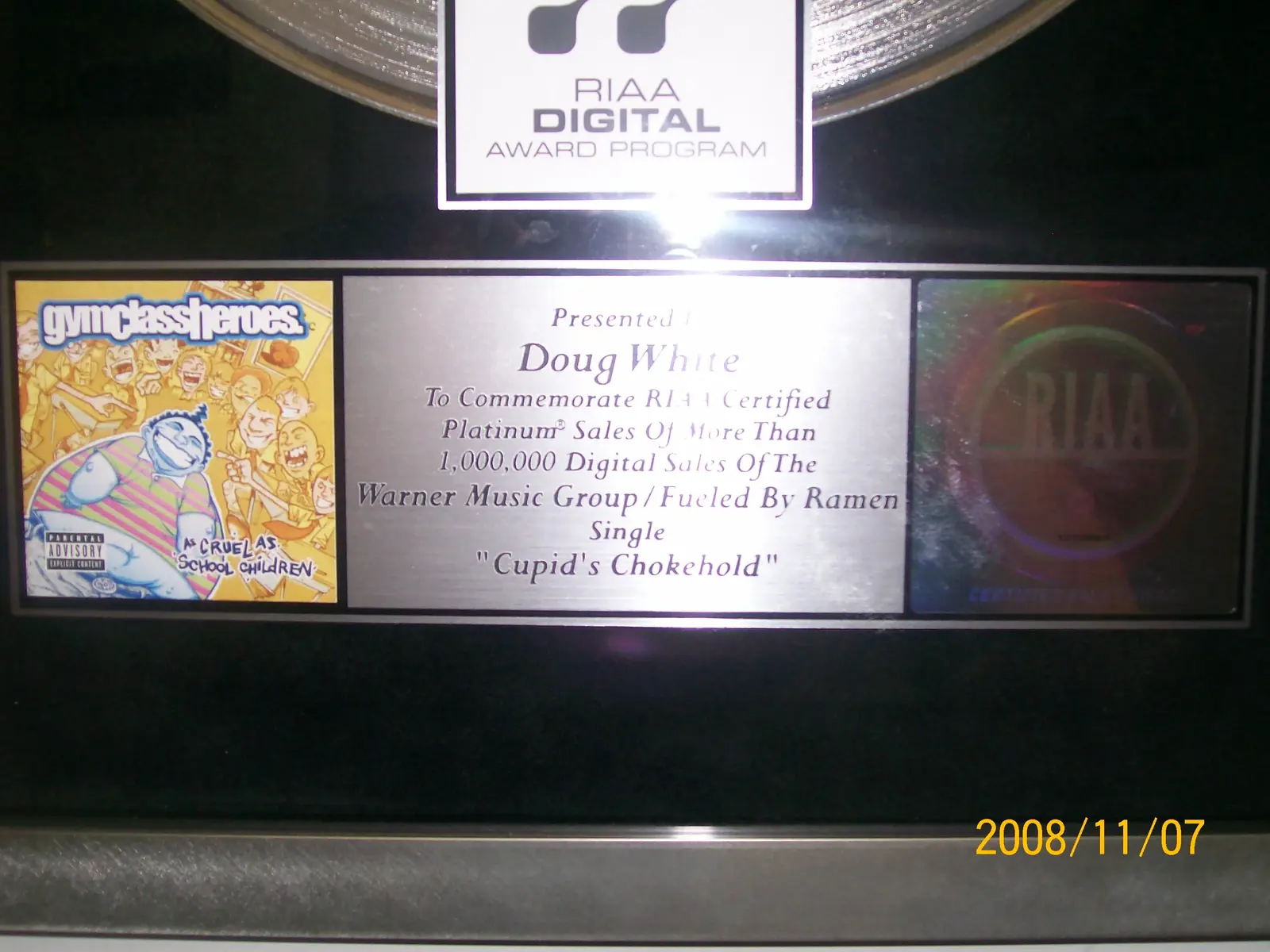
Say it the way most of us say it: "It sold a million copies — so it's Platinum, right?" That's the reader's wrong sentence, and it hides two mistakes in six words. A modern album can reach a million units without selling a million copies of anything, and even a genuine million doesn't make it Platinum until somebody asks, pays, and passes an audit. The plaque isn't a scoreboard. It's a certificate, and certificates have paperwork.
The short version: the award isn't automatic, and here's the paperwork
- The label applies. The RIAA's own application page states it flatly: certifications aren't automatic, and the requestor has to supply the sales and streaming data for the audit.
- The thresholds are units, not copies. Gold is 500,000 units; Platinum is 1,000,000 units; Multi-Platinum starts at 2,000,000; Diamond is 10,000,000.
- A unit is a basket. One album sale is 1 unit. Ten permanent track downloads from the album are 1 unit. And 1,500 on-demand streams of the album's songs are 1 unit.
- A single runs on a faster exchange rate. One permanent download is 1 unit, and 150 on-demand streams are 1 unit — with the same 500,000 and 1,000,000 thresholds on top.
- Only U.S. activity counts, only on-demand streams count, and fan-made uploads don't count. The rest of the world can love a record without moving its RIAA total by a single unit.
Watch it happen: one small album, three piles
Here's the trick — build a Gold album out of round numbers before touching a real threshold. Imagine an album, ten songs, with a year of U.S. activity in three piles.
Pile one, album sales: 100,000 people buy the whole album, on vinyl, CD, or as a permanent digital download. Each sale is 1 unit. That's 100,000 units.
Pile two, track downloads: fans buy 1,000,000 individual songs from the album as permanent downloads. Ten downloads make 1 album unit, so divide 1,000,000 by 10. That's another 100,000 units. This is the track-equivalent route — the industry shorthand is TEA, and the only thing worth remembering is the ten-to-one swap.
Pile three, streams: the album's songs collect 450,000,000 on-demand streams in the United States. Fifteen hundred streams make 1 album unit, so divide 450,000,000 by 1,500. That's 300,000 units.
Now add the piles out loud: 100,000 plus 100,000 plus 300,000 is 500,000 units. Five hundred thousand out of the 500,000 the Gold tier asks for. The album is Gold-eligible — eligible, not certified. Nobody at the RIAA has seen a single one of these numbers yet, because nobody has filed. And if our imaginary label wants Platinum on streams alone, the RIAA's own eligibility table does that division too: 1,500,000,000 streams — one and a half billion — is the streams-only road to 1,000,000 album units.
The thresholds, with their denominators showing
The RIAA's criteria page prints the ladder and the year each rung arrived. Gold, 500,000 units, established 1958. Platinum, 1,000,000 units, established 1976. Multi-Platinum, 2,000,000 units and rising in steps of 1,000,000, established 1984. Diamond, 10,000,000 units, established 1999.
Read those as units out of a threshold, never as copies. A Platinum album hasn't necessarily put a million albums into homes; it's crossed 1,000,000 units of a basket that mixes albums sold, tracks downloaded, and streams divided by 1,500. Two Platinum albums can arrive at the same plaque by completely different roads — one mostly bought, one mostly streamed — and the award itself won't tell you which road either of them took. That's the caveat, and it rides inside the definition rather than under it: the unit is a constructed currency, so the plaque certifies the total, not the recipe.
There's a separate ladder for music that's more than 50 percent Spanish-language lyrics, the Premios de Oro y Platino Latin program. Its rungs sit far lower — Oro at 30,000 units, Platino at 60,000, Diamante at 600,000 — counted with the same album formula. Same machinery, smaller denominators, different program. A headline that quotes a Platino figure against a Platinum threshold is comparing two different ladders.
A single isn't a small album: the 150-to-one rate
Singles certify under their own award, the Digital Single Award, and the exchange rate changes. For a single, each permanent download counts as 1 unit, and 150 on-demand audio or video streams count as 1 unit — ten times faster than the album rate, because the thing being measured is one song rather than a bundle of them.
Run a single small, the same way. A song sells 100,000 permanent downloads: that's 100,000 units. It collects 60,000,000 on-demand streams: divide by 150, and that's 400,000 units. Add them: 100,000 plus 400,000 is 500,000 units — a Gold single, once the audit says so. The RIAA's eligibility table cross-checks the stream-only road: 75,000,000 streams make a Gold single's 500,000 units, and 150,000,000 make a Platinum single's 1,000,000.
One guardrail from the audit rules keeps the two programs from double-counting a fan's money: tracks sold as part of a permanent full-album sale don't count toward digital single sales. Buying the album is an album unit. Buying the song on its own is a single unit. The same purchase can't be both.
What counts, and what never reaches the pile
The audit requirements draw the borders, and the borders explain half the arguments fans have with this system.
- Geography: all certifications rest on permanent downloads and on-demand streams distributed within the United States. A stream in London or Toronto adds zero to an RIAA total, however big the global counter on a streaming app looks.
- The stream has to be chosen. On-demand means the listener picked the song. Streams a service reports to labels count whether they're subscription-funded or ad-supported — but user-generated videos don't count; only official label or company videos do.
- Timing: physical albums become eligible 30 days after the release date; digital albums are eligible at release. Pre-orders don't count until the album is out and the buyer has received it.
- The pile has to be real commerce. Promotional copies, cut-outs and surplus sell-offs are excluded, and free promotional downloads don't count, because a download counts only when its price reflects market-rate compensation to the label.
Why the plaque lags the moment
So why do certifications land months or years after the listening happened? Because every step after eligibility is a human decision. The label has to gather the sales reports and label copy, file through the RIAA's request portal, and pay a non-refundable audit fee — $350 per title for a member company, $450 per level for a non-member, per the RIAA's application page. An independent accounting firm, Gelfand, Rennert & Feldman, then conducts the audit; the RIAA notes its auditors have reviewed applications for more than 40 years. Paperwork that isn't provided within 30 days of applying can get the request denied, fee kept.
And there's a quieter delay built into the system: a label can ask for a finished certification to stay hidden. The application page explains that titles a label has asked to keep hidden won't appear in the public database until the label requests they go live. So the public record can lag reality twice over — once because nobody filed yet, and once because somebody filed and chose the moment. An artist whose plaque looks years late hasn't necessarily been overlooked. The likelier story is that the audit waited for a slow Tuesday, a reissue campaign, or an anniversary that made the announcement worth more.
The test to take to the next certification headline
Here's the test, and it fits the next headline you'll meet. Ask: units or copies? Asked-for or assumed? And which exchange rate — 1,500 streams to the album unit, or 150 to the single unit? A certification that survives those three questions is a fact about an audit. One that can't is a fan's estimate wearing a plaque's clothes.
If exchange rates are your kind of puzzle, our Billboard album-unit explainer (linked below) walks the chart world's version — a different ruler, cut by a different body, where the stream-to-unit rate isn't the RIAA's at all. Same listening, two currencies. Ask which one's doing the counting before you quote either number.
Sources
- RIAA, Certification Criteria (Gold & Platinum program) — the ladder (Gold 500,000 units, 1958; Platinum 1,000,000, 1976; Multi-Platinum 2,000,000 in 1,000,000 steps, 1984; Diamond 10,000,000, 1999); the Latin program (Oro 30,000; Platino 60,000; Diamante 600,000; the 1,500 streams = 10 track sales = 1 album sale formula); U.S.-only counting; the 30-day physical / at-release digital eligibility rule; pre-orders counted only after release and receipt; promotional copies, cut-outs and surplus sales excluded. https://www.riaa.com/gold-platinum/about-awards/ — opened in full 2026-11-06.
- RIAA, Apply (Gold & Platinum) — "Certifications are not automatic," with data supplied by the requestor; the audit fees ($350 per title member / $450 per level non-member, non-refundable); audit documents due within 30 days; hidden certifications staying out of the public database until the label asks for them to go live; the streams-only eligibility table (Gold single 75,000,000 streams; Gold album 750,000,000; Platinum album 1,500,000,000); the single formula (150 streams or 1 download = 1 unit) and the album formula (1,500 streams or 10 downloads or 1 album sale = 1 unit); on-demand, non-UGC streams only. https://www.riaa.com/gold-platinum/apply/ — opened in full 2026-11-06.
- RIAA and GR&F, Album Award audit requirements (PDF) — album units defined (1 album sale; 10 permanent track downloads; 1,500 on-demand audio and/or video streams); audits conducted for a fee by Gelfand, Rennert and Feldman, LLP; physical albums eligible 30 days after the initial street date; only official video streams eligible; free promotional downloads excluded. https://www.riaa.com/wp-content/uploads/2016/02/ALBUM-AWARD-RIAA-AND-GRF-CERTIFICATION-AUDIT-REQUIREMENTS.pdf — opened in full 2026-11-06.
- RIAA and GR&F, Digital Single Award audit requirements (PDF) — single tiers at the same 500,000 / 1,000,000 / 2,000,000 / 10,000,000 units; 1 permanent download = 1 unit and 150 on-demand streams = 1 unit; subscription and ad-supported on-demand streams accepted; U.S.-only; official videos only; tracks sold inside a full-album sale excluded from single counts. https://www.riaa.com/wp-content/uploads/2016/02/DIGITAL-SINGLE-AWARD-RIAA-AND-GRF-CERTIFICATION-AUDIT-REQUIREMENTS.pdf — opened in full 2026-11-06.

 Next in this issue · ScienceA Space Station Falls Toward Earth the Entire Time It Orbits. Here Is Why It Never Lands. →
THE MOTHER LODE — Edition Nº 004 · Late — Suite Picks. Photos are real, licensed and credited on the page; designed cards carry figures from the article itself.