
Before a Musical Reaches Broadway, It Is Read, Workshopped and Tried Out of Town, and Each Stage Tests a Different Thing
Each stage tests a different question — a reading asks whether the writing holds, a workshop asks whether the show moves, a tryout asks whether strangers stay with it.
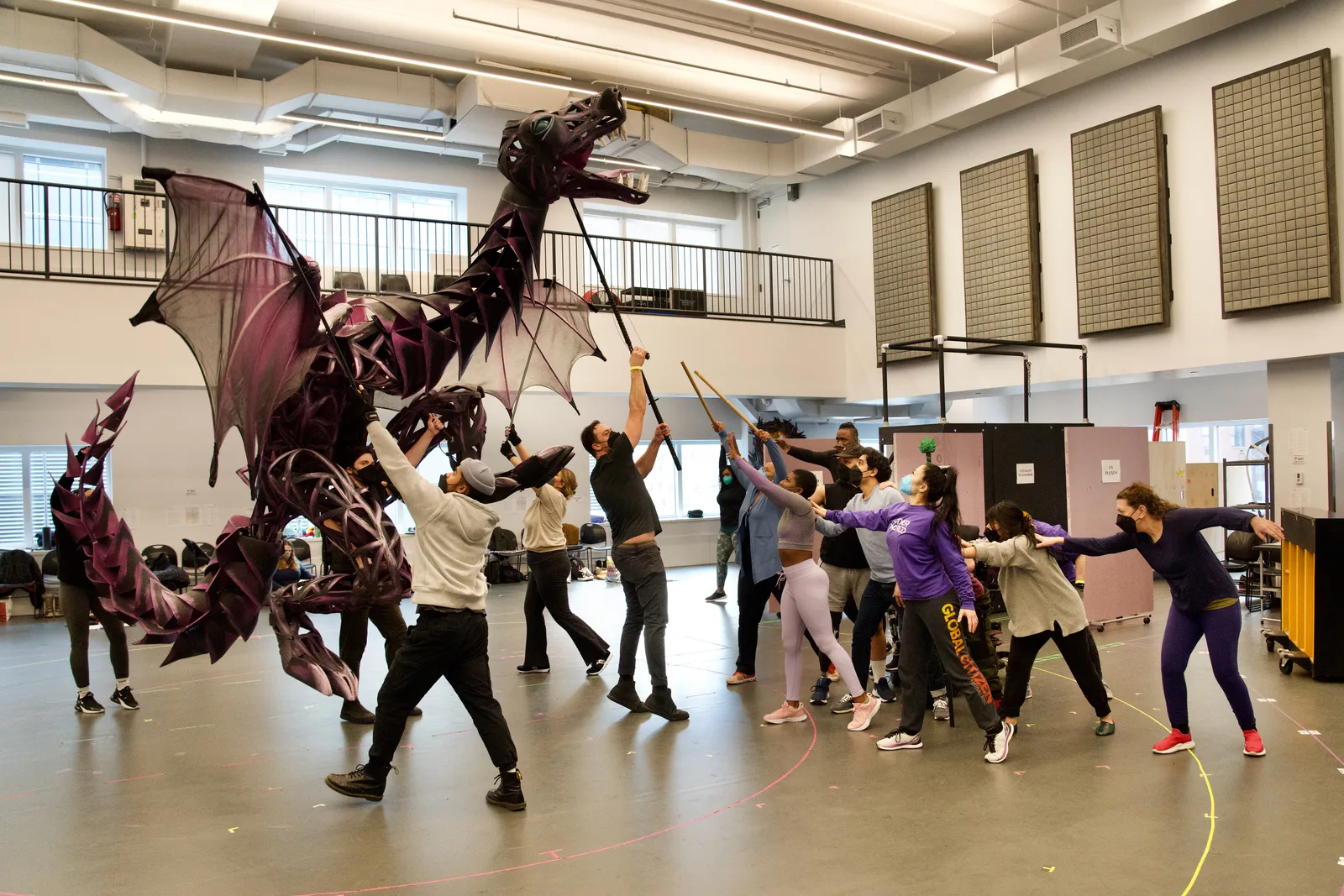
A room, a piano, actors at music stands with the score in front of them. Nobody's in costume. Nothing's built. If the song doesn't land in that room, the team learns it cheap — before a set exists, before a theater's booked, before a stranger's paid for a seat. That's the first test a new musical faces, and it's the cheapest one it'll ever get. The tests after it get more expensive, more public and harder to reverse, and each one exists to answer a question the earlier test couldn't.
A Reading Asks Whether the Writing Holds
The reading comes first because it strips the show down to book, music and lyrics. At Musical Mondays Theatre Lab in Manhattan, Playbill reports, a work starts with a table reading for a select group of musical theater professionals, who then work with the writers before the next stage of presentation. After that come public staged readings under the Actors' Equity Reading Code, using professional New York actors, directors and musical directors. A staged reading in that program can be an abridged version of a work, a first act, or a complete musical — and a piece can move from a shorter presentation to a complete reading as it develops.
The trade's shorthand for the standard form is the 29-hour reading. Playbill's report on the "Crazy Rich Asians" musical describes a weeklong work session and a 29-hour developmental workshop at New 42 Studios, with the film's director, Jon M. Chu, overseeing the staging. Marin Mazzie, talking to Playbill about "Carrie," gives the number its real weight. Her 2009 "Carrie" engagement spread those 29 hours across two weeks, and she corrects anyone who calls it a workshop: the hours went mostly to learning the music, rewritten material included, and one new number, "World According to Chris," was written for that reading. A reading doesn't stage a show. It lets the writers hear whether the material survives being spoken and sung out loud — and what needs rewriting while rewriting's still just rewriting.
A Workshop Asks Whether the Show Moves
A workshop puts the show on its feet. The form's modern history starts in the 1970s: Playbill columnist Ken Mandelbaum traces the shift to the developmental process that produced "A Chorus Line," after which musicals were more and more frequently given workshop productions that could extend over months and sometimes end in public performances. After its workshops, a show could then go out of town — or go directly to Broadway.
Mazzie's distinction draws the line exactly. A six-week workshop, in her account, is where the team works on the piece and stages it. Playbill's record shows both ends of that range. "Steel Pier" and "Titanic" were seen, before Broadway previews, only by people invited to private workshop performances, and both workshops took place within a year of Broadway. "Side Show" got a fully staged workshop production with invited audiences at the Richard Rodgers Theatre. And "Ragtime" reached its Toronto opening after what Mandelbaum calls an extended series of readings and workshops — the two forms stacked, in order, across one show's development.
A Lab Asks Which Sections Are Broken
A lab isn't a shorter workshop. It's a targeted one. When Manhattan Class Company and producer Bernie Telsey took on "Carrie," Mazzie tells Playbill, the company ran labs over two to three weeks where the authors, the director and an assembled cast worked on chunks of the piece they'd judged problematic. The labs had no performance goal at the end of them. The producer was already committed, so the pressure to assemble the whole show for an audience wasn't there — the work could stay on the sections that needed it.
Playbill's reporting on "Hands On a Hardbody" shows the lab used the same way, later in a show's life. The musical opened at La Jolla Playhouse in the spring of 2012, and its producers then scheduled a developmental lab in New York for October 1–13, ahead of a Broadway launch in early 2013. The lab's stated job was narrow: address changes to the show since the La Jolla premiere. La Jolla had commissioned the piece and developed it through a series of readings and workshops — so one show, in Playbill's own reporting, passes through every early stage in sequence, then returns to a lab when a full production exposes what still needs fixing.
A Tryout Asks Whether Strangers Stay With It
The out-of-town tryout is the oldest stage here, and it's the first one that risks real money in front of a paying public. In the 1950s and early 1960s, Mandelbaum writes, musicals almost without exception opened on Broadway after tryout runs in Boston, Philadelphia and New Haven — some shows played one tryout town, others hit two or three. Playbill's previews explainer names the modern map: Boston, Chicago, New Haven, Seattle, San Diego and Washington, D.C. were and are important proving grounds. The protection those runs once offered has thinned. The internet, Playbill notes, has weakened the shield a tryout used to give a show from New York critics, and the Golden Age tryout tradition is rarer now.
Rarer, not gone — because the work a tryout does can't be done in a rehearsal room. Playbill's account is specific: major changes aren't unusual during a tryout run. During "Aladdin"'s 2013 tryout in Toronto, negative reviews led the team to overhaul several elements of the show before Broadway. Other shows make casting changes, large set and costume design changes, and revisions to the song list and its order. "Company"'s pre-Broadway tryout cycled through a number of finale songs before the show settled on "Being Alive." The cost explains why producers hesitate. A tryout adds a couple of million dollars to a production's cost, in Mandelbaum's accounting — and some shows, "Sweeney Todd" and "City of Angels" among them, opened on Broadway to acclaim without an out-of-town run or even a major workshop behind them. The tryout is a choice, not a toll every show pays.
Previews Ask the Same Question in the Broadway Theater
A show that skips the road — or finishes with it — still gets one last developmental stage at home. Previews are Broadway's pre-opening test run: the cast and creative team test the work in front of live audiences in the evening and rehearse and make changes during the day, Playbill explains. Broadway previews typically run two to six weeks and average about 30 preview performances.
The stage matters because of how it ends. While a show's in previews, adjustments can still be made. Once opening night arrives, the material's resolved and the performance is locked — frozen, in the industry's word — and critics share their reviews. Everything before that night is built to keep the show changeable. A reading keeps it changeable on paper. A workshop keeps it changeable on its feet. A lab keeps one broken section changeable without reopening the whole piece. A tryout keeps it changeable in front of strangers who owe it nothing. Read in that order, the road to Broadway isn't a ritual. It's a sequence of increasingly honest rooms. If you're following a show you've heard is headed for New York, our explainer on previews and what "frozen" means picks up where the tryout leaves off, and our account of how Broadway tours are routed shows what happens to a show after Broadway sends it back out to the cities that used to test it.
Sources
- Ken Mandelbaum, "Ken Mandelbaum's AISLE VIEW: The Musical Road To Broadway," Playbill, April 13, 1997 (updated December 2, 2021) — the tryout era in Boston, Philadelphia and New Haven; the 1970s turn to workshop productions after "A Chorus Line"; workshops extending over months and ending in public performances; shows moving from workshops out of town or directly to Broadway; the regional and Off-Broadway routes of the 1980s; the tryout adding a couple of million dollars in cost; "Sweeney Todd" and "City of Angels" opening without tryouts or major workshops; private invited workshop performances for "Steel Pier" and "Titanic"; the fully staged "Side Show" workshop at the Richard Rodgers Theatre; "Ragtime"'s extended series of readings and workshops before Toronto. https://playbill.com/article/ken-mandelbaums-aisle-view-the-musical-road-to-broadway-com-101974 — opened in full.
- Playbill, "Everyone Loves Another Op'nin', Another Show. But What About Previews?," April 16, 2024 — previews defined as a pre-opening test run, with rehearsal and changes by day; the two-to-six-week, roughly 30-performance range; the show frozen and locked at opening night; tryout cities Boston, Chicago, New Haven, Seattle, San Diego and Washington, D.C.; the internet weakening the tryout's protection from New York critics; major changes during tryouts, including "Aladdin"'s 2013 Toronto overhaul and "Company"'s finale search ending at "Being Alive." https://playbill.com/article/everyone-loves-another-opnin-another-show-but-what-about-previews — opened in full.
- Playbill, "Hands On a Hardbody Will Be Molded in Fall 'Lab' Prior to Spring 2013 Broadway Ignition," August 15, 2012 — the October 1–13 developmental lab in New York to address changes since the La Jolla Playhouse world premiere, ahead of an early 2013 Broadway launch; La Jolla's commission and its development of the piece through readings and workshops. https://playbill.com/article/hands-on-a-hardbody-will-be-molded-in-fall-lab-prior-to-spring-2013-broadway-ignition-com-196702 — opened in full.
- Playbill, "DIVA TALK: Catching Up With Carrie Star Marin Mazzie," March 23, 2012 — Mazzie's distinction between a 29-hour reading spread over two weeks (learning the music; "World According to Chris" written for it) and a six-week workshop where the show is staged; the later "Carrie" labs over two to three weeks working on problematic sections with no performance goal. https://playbill.com/article/diva-talk-catching-up-with-carrie-star-marin-mazzie-com-188758 — opened in full.
- Playbill, "See Ruthie Ann Miles, Helen J. Shen, Alyssa Joy Fox, More in Crazy Rich Asians Musical Workshop," December 22, 2025 — the "Crazy Rich Asians" reading at New 42 Studios and its weeklong work session and 29-hour developmental workshop, directed by Jon M. Chu. https://playbill.com/article/see-ruthie-ann-miles-helen-j-shen-alyssa-joy-fox-more-in-crazy-rich-asians-musical-workshop — opened in full.
- Playbill, "Kudisch, Sullivan, Raines, Pedi, Ross Sing Ervin Drake Songs at Feb. 10 Musical Mondays Benefit," January 16, 2008 — Musical Mondays Theatre Lab's multi-step reading program: a table reading for a select group of professionals who then work with the writers, followed by public staged readings under the Actors' Equity Reading Code; staged readings as an abridged version, a first act, or a complete musical. https://playbill.com/article/kudisch-sullivan-raines-pedi-ross-sing-ervin-drake-songs-at-feb-10-musical-mondays-benefit-com-146899 — opened in full.

 Next in this issue · The ExplainersA Presale "Record" Means One Ticket Seller Beat Its Own Best Day. Here's What the Announcement Leaves Out. →
Get the alert when it breaks.
When a story breaks on a beat you pick, we email or text you. When there's an emergency in your ZIP, we text you. Nothing else, and no ads in any of it.
Check your inbox — and your phone.
THE MOTHER LODE — Edition Nº 006 · Morning. Photos are real, licensed and credited on the page; designed cards carry figures from the article itself.